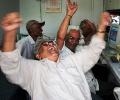
Indian benchmark indices, the Sensex and Nifty, witnessed a significant rally, with the Sensex jumping 2,009 points and the Nifty surging 576 points. This surge is attributed to a sharp decline in crude oil prices, hopes for a resolution to the West Asia conflict, and the Democratic Party gaining control of the US Congress in the midterm elections.
Indian benchmark indices Sensex and Nifty surged significantly in early trade, driven by a sharp decline in crude oil prices and optimism surrounding a potential resolution to the West Asia conflict following the US midterm elections, which saw the Democratic Party gain control of Congress. Track Sensex, Nifty on November 5, 2026.

Indian stock markets extended their rally for the fifth consecutive day, with the Sensex climbing nearly 384 points to close above 77,000, driven by foreign fund inflows, easing crude oil prices, and improved global sentiment following the US midterm election results.

British Prime Minister Andy Burnham's past meetings with Manchester City chairman Khaldoon Al Mubarak have come under scrutiny following criticism of Burnham's initial response to the club's financial rule breaches.

US President Donald Trump, Chinese President Xi Jinping, and Russian President Vladimir Putin held an unprecedented trilateral meeting at the APEC Economic Leaders' Meeting in Shenzhen, discussing global conflicts, nuclear arms reduction, and artificial intelligence.

US President Donald Trump received a grand welcome from Chinese President Xi Jinping in Shenzhen for the APEC Economic Leaders' Meeting, culminating in an unprecedented trilateral meeting with Russian President Vladimir Putin. The leaders discussed critical global issues including the Ukraine conflict, Iran, artificial intelligence, and nuclear arms reduction, marking significant political gains for each leader on the international stage.

The final draft of the 2008 Democratic Party Platform, which will be voted on during the Democratic National Convention next week in Denver, Colorado, has declared that the United States and India are 'natural strategic allies'. In the section entitled 'Renewing American Leadership', which contains a paragraph that calls for 'Lead in Asia', the platform stated, "We are committed to US engagement in Asia."

Beijing has been wary of Sanae Takaichi's efforts to boost Japan's military profile since taking office six months ago, points out Dr Rajaram Panda.

Following the horrific Jamui molestation case, new incidents of harassment have been reported in Bihar's Samastipur and Muzaffarpur districts, leading to five arrests and prompting strong criticism from opposition leaders against the BJP-led NDA government over the state's law and order situation.
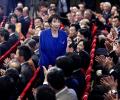
As a protege of Shinzo Abe, Takaichi is expected to scale bilateral ties much higher. Trade and investment shall grow. People-to-people contacts shall be scaled up, points out Dr Rajaram Panda.

Leader of Japan's ruling Liberal Democratic Party Sanae Takaichi reacts as she is applauded after being elected as prime minister, October 21, 2025

In the Indo-Pacific's new era -- where perception shapes reality faster than treaties -- the real entrapment is not of China or the United States. It is the test Japan has set for itself -- and whether partners like India, acting as balancers rather than accelerants, can help ensure that the story ends in stability, points out Varun Arya.

Earlier in July, Ishiba had faced a major setback after a significant electoral defeat in the upper house of Japan's parliament as his coalition failed to attain a majority. This came after his party also failed to attain a majority in the lower house of the parliament last year.

For India, the guiding principle should remain clear: Engage Bangladesh as a sovereign nation and society rather than through the prism of any individual leader or political party, suggests Manoj Mohanka.

The Japanese PM's visit to Assam comes amid festering uneasiness in Tokyo about Beijing's assertiveness in the Indo-Pacific region.

There is nothing to be worried about as bilateral ties are robust with solid foundations. Both are on the same page on the economic and defence/security ties bilaterally and globally and that shall continue irrespective of change in political dispensation in either country, points out Dr Rajaram Panda.

Chinese President Xi Jinping has arrived in Pyongyang for his first official visit in seven years, meeting with North Korean leader Kim Jong-un to reaffirm their long-standing friendship and pledge further development of bilateral relations amidst Pyongyang's deepening military ties with Moscow and China's assertions against Japan's 'new militarism'.

India has secured international support in its fight against terrorism, with Russia, Japan, and the United Arab Emirates expressing solidarity and a commitment to working together to combat the threat. This follows a recent terrorist attack in Pahalgam, India, which claimed 26 lives. Multi-party parliamentary delegations from India briefed the leaderships of these countries on Operation Sindoor, India's response to the attack, and discussed ways to enhance cooperation in counter-terrorism and combating radicalism. These developments highlight the growing global consensus against terrorism and the importance of international collaboration to address this shared challenge.

Biden has been under attack from his opponents and the Republican Party for his immigration policies as hundreds and thousands of illegal immigrants enter the United States every month.
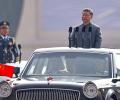
'For the first time in a hundred years, the army has been taken out of the political equation. And for the first time ever, there is only one man who calls the shots. Not even Mao had this kind of power.'
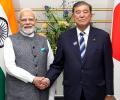
Prime Minister Shigeru Ishiba's sudden resignation after only a year in office has thrown Japan into political turmoil, raising doubts about how the country will handle economic and regional challenges, observes Dr Rajaram Panda.

Trinamool Congress (TMC) has appointed Abhishek Banerjee as its new parliamentary leader in the Lok Sabha, replacing Sudip Bandopadhyay. The decision was made during a virtual meeting chaired by Mamata Banerjee. This move is seen as a generational shift and a preparation for the 2026 West Bengal Assembly elections.

Kishida Fumio, who served as Japan's foreign minister from 2012 to 2017, visited India multiple times in that role and interacted with Prime Minister Narendra Damodardas Modi both in New Delhi and in Tokyo, and with Dr Manmohan Singh, when the then prime minister, visited Japan in 2013.

In a runoff between Kono Taro and Fumio to lead Japan's main ruling Liberal Democratic Party, Fumio was declared the winner and is assured to become Prime Minister next week.

Like the realisation on the failure of development, we have also internalised the failure on democracy, argues Aakar Patel.

In a world fractured by uncertainty, India stands out for its policy consistency, paired with sustained ambition, points out Pritam Banerjee.
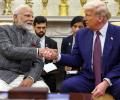
The new US national security strategy signals a retreat from global dominance while reaffirming continuity in India's role in Indo-Pacific security and Quad cooperation, points out former foreign secretary Shyam Saran.
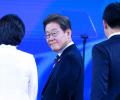
Lee Jae-myung's decisive victory in South Korea's snap presidential election marks a major political shift driven by public backlash against authoritarian, with significant implications for domestic reform and the future of the US-South Korea alliance, observes Dr Rajaram Panda.

Two women are in contention to become prime minister for the first time in Japan's history -- a potential turning point for a country that ranks below Saudi Arabia in terms of female political representation, points out Rajaram Panda.

The Democratic Party of Japan has won a landslide victory in the elections on Sunday, ending 50 years of almost unbroken rule by the Liberal Democratic Party, the BBC has said.
The leader of Liberal Democratic Party Shinzo Abe has become Japan's new prime minister, giving top priority to overcoming the prolonged economic slump. Abe, who led the LDP to a landslide victory in the general election after three years in opposition, will form a new Cabinet later in the day with his close allies.
If one were to go by the latest manifesto, Hatoyama's world consists essentially of Japan, the US, China, South Korea, North Korea (all mentioned by name) and "other countries". India has been relegated to the position of one of the "other countries".

Former Japanese Prime Minister Shinzo Abe was on Friday confirmed dead after he was shot at during a campaign speech in Nara City, western Japan, local media reported citing officials.

The decision follows a US-led diplomatic boycott of the Games over concerns about human rights in China

'He was making a broader point. Our allies and partners know very well that -- how much this president respects them'
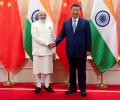
'The strategic difference over technology and territory between India and China remain great and security interests on both sides will likely prevent a short-term rapprochement of any depth.'

Shigeru Ishiba is expected to prioritise strengthening Japan's military capabilities and fostering deeper international partnerships, particularly with India, with whom Japan shares significant strategic interests, explains Dr Rajaram Panda.

According to the final count, Suga secured 377 votes, followed far behind by former Foreign Minister Fumio Kishida with 89 votes and former defence minister Shigeru Ishiba with 68 votes.

'What lies at the core of Abe's stance is Japan's crisis management ability amid the increasingly tense North Korean situation,' says Rajaram Panda.
India and Japan are close to finalising a civil nuclear cooperation agreement, former Japanese prime minister Yukio Hatoyama said in New Delhi on Monday."India and Japan have come to a stage of concluding the nuclear cooperation agreement," said Hatoyama, a key leader of the ruling Democratic Party of Japan.He hoped India would uphold its unilateral moratorium on nuclear tests and underscored the sensitivity Japanese people attach to it.
